UrbanPeak Marketing GmbH UrbanPeak Marketing GmbH · München

UrbanPeak Marketing GmbH — Work

What the engagements actually look like

We show the work, including the corrections.

We do not publish client names, and we will not publish invented case studies either. What follows are the engagement shapes we see most often, described concretely enough that you can tell whether your situation resembles one of them. Each shape names the constraint that made it difficult.

If you want to discuss a specific situation under a confidentiality agreement, the first call is the place for it.

  • Open ruled notebook and pencil on a Munich desk in morning light

    Disagreement, in writing

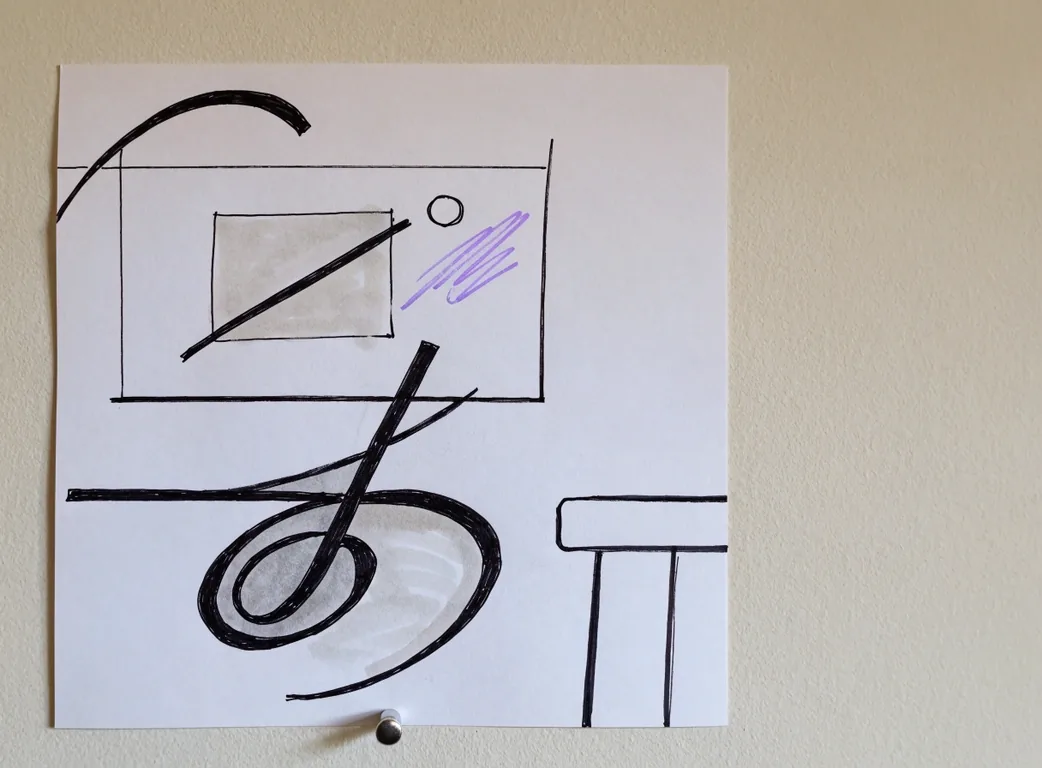
  • Hand-drawn two-by-two matrix with one quadrant crossed out and redrawn

    The revised answer

  • Paint wall fragment with a lifting paper edge and a row of thumbtack holes

    Where the sheet was moved

Shapes described

Five

First answer revised

Four of five

Internal owner named

Every shape

Client names published

None

Engagement shapes

Five situations we meet most often

Each shape names the constraint that made the difficult part difficult. Read the left column for the situation, the right for what the work actually was.

Three corrections recorded by the method

Shape one

The mid-sized manufacturer whose offer outgrew its website

A B2B manufacturer with roughly 200 employees had shifted from component supply to full system integration over four years. Sales had adapted; the website, the trade fair material, and the trade press still described the old business.

We ran the situation review across both functions, then built the position statement with the two disagreeing department heads in the room rather than around them. The written output was short; the useful part was the argument that produced it.

Shape two

Entering the German market with an existing English playbook

A software company with a working UK and Nordics motion wanted to enter Germany, and had prepared a translated version of its existing material. The translation was competent and the message was wrong: the German buyer's first question was about data processing location, and the English material answered a different question first.

We rebuilt the message architecture for the German market rather than translating it, kept the global position fixed, and defined which local adaptations were permitted. The governance rule set turned out to be the more durable deliverable.

Shape three

Internal communication ahead of a site consolidation

A company consolidating two production sites had decided on a communication date before it had decided on the message sequence. The works council had heard the plan from a supplier. We were brought in five weeks before the announcement.

The work was sequencing, not strategy: who is told what, in which order, in which format, with which named owner, and what the second and third messages say when reality shifts. The escalation map covered four scenarios; two of them were used.

Shape four

The family business with three brands and one customer

A third-generation company had accumulated three brand names across two product lines and a service division. Customers used all three interchangeably, which meant none of them carried any association.

We ran a positioning and Markenstrategie engagement that ended in a recommendation to consolidate two of the three and retain the other for legal reasons. The internal rollout took longer than the analysis, which is typical.

Shape five

The trade press relationship that had gone quiet

A company that had been a reliable source for its sector press for a decade found itself quoted less often, without any obvious event. Nothing had broken; the spokespeople had changed and the outreach had stopped.

This was Medienarbeit work, and it was unglamorous. We rebuilt the contact map, prepared two spokespeople for interviews, and ran the first outreach round with the client's team rather than for them.

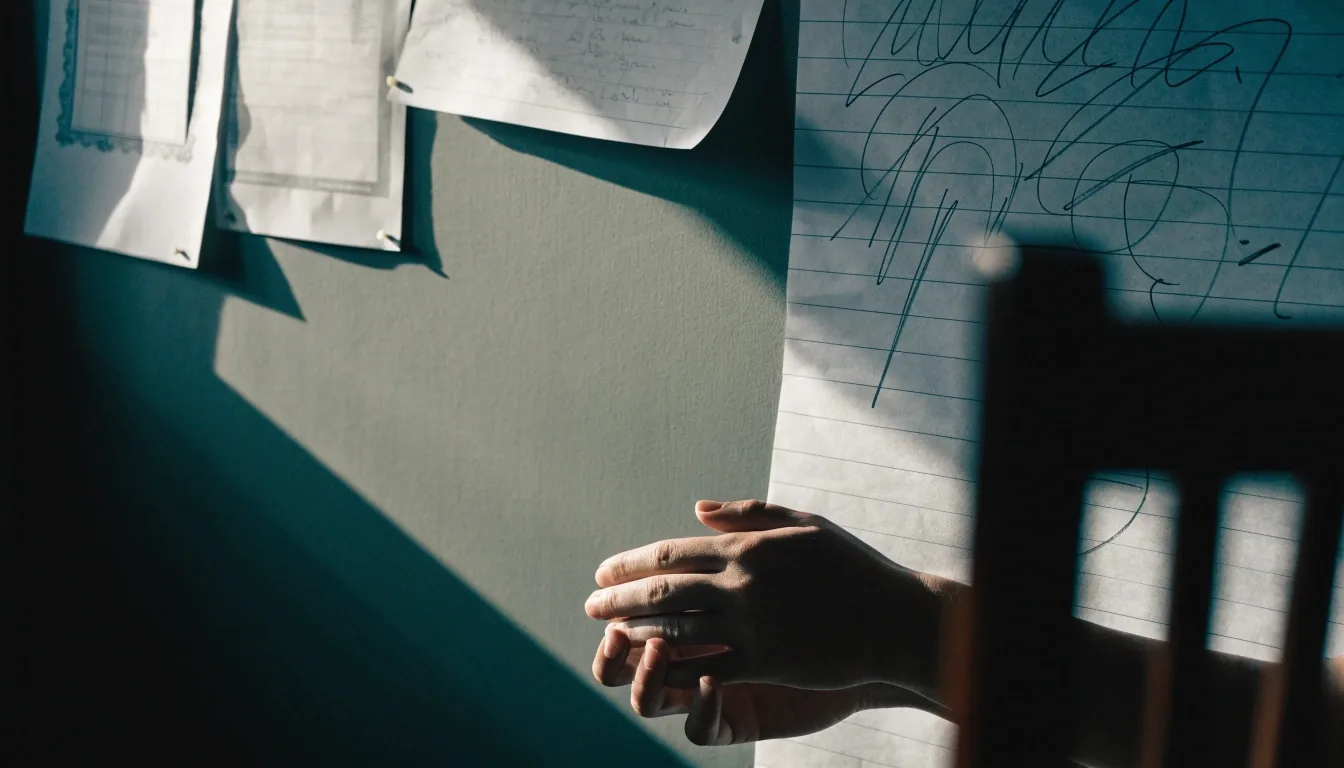
Munich boardroom working wall under cold four o'clock north light, hands only

The work wall

Every shape had one owner inside the company

Across all five shapes, the result survived because someone on the client side had their name against it. Where that name was missing, the work came back to us after a quarter. The photograph is our own working wall in Munich, photographed at four in the afternoon, on a day one of the sequencing maps was re-drawn for the second time.

Seven marks: what this page removed and why

The record

What a case study should answer

Three artefacts from our own working practice. They are not client deliverables — a drawn user journey, a desk detail, a stakeholder map — because the client pieces sit under confidentiality and the drawings are what our method produces.

User journey

What the customer walks through, drawn

Every engagement starts with the journey as it actually runs, not as it was planned. Five steps, left to right; one is usually wrong.

The drawn version takes an afternoon and settles more arguments than a slide deck, because the gaps are visible where the boxes do not connect.

Steps revisited

One of five, on average

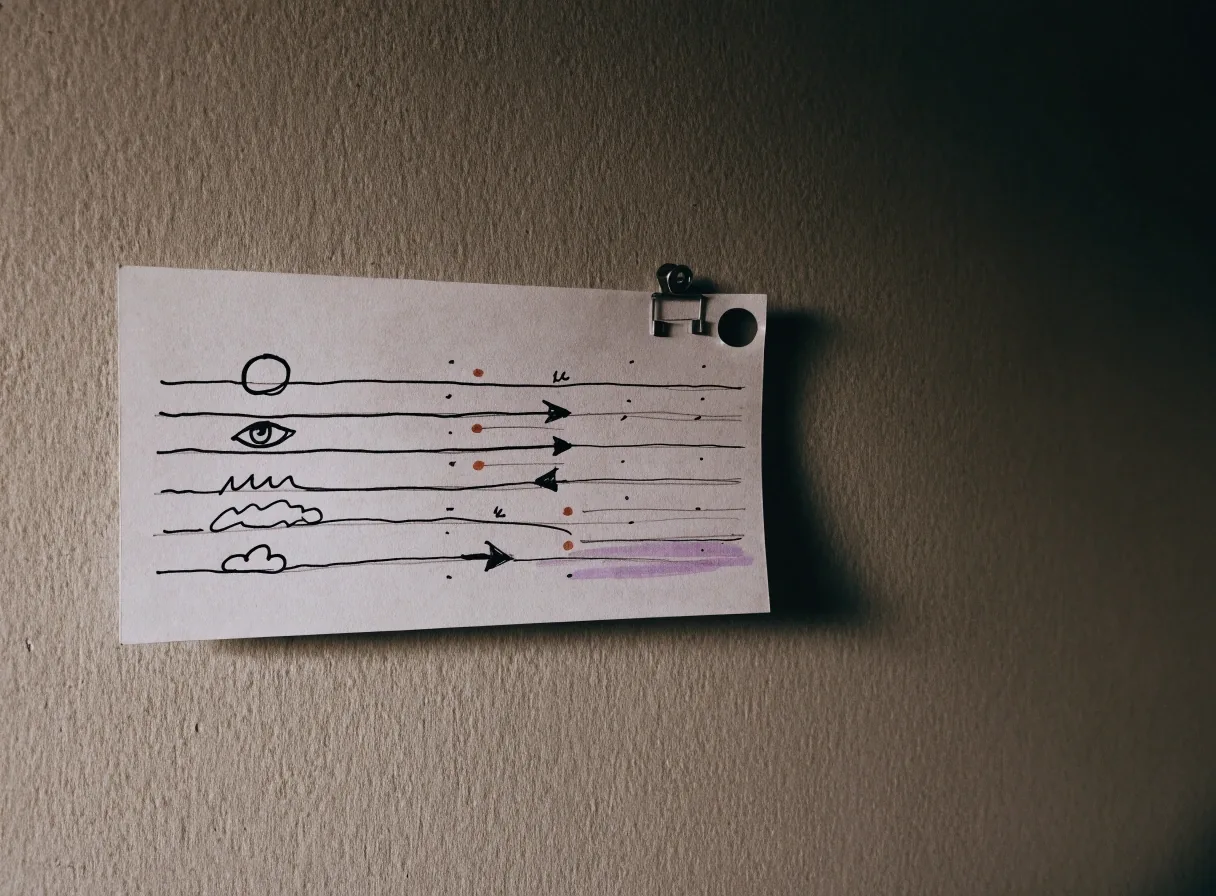
Hand-drawn five-step user journey with one box reruled

Client-side desk

Who holds the work once we leave

The most useful question we ask a prospect is who, by name, will own the result after the engagement closes. If the answer is «the consultancy will handle it», we usually recommend not starting.

In every shape above, a person on the client side held the pen: they argued with the first draft, they read the second, and they ran the third round themselves. That is why the work stayed after we stopped attending the meetings.

Written position before production

Present in all five shapes

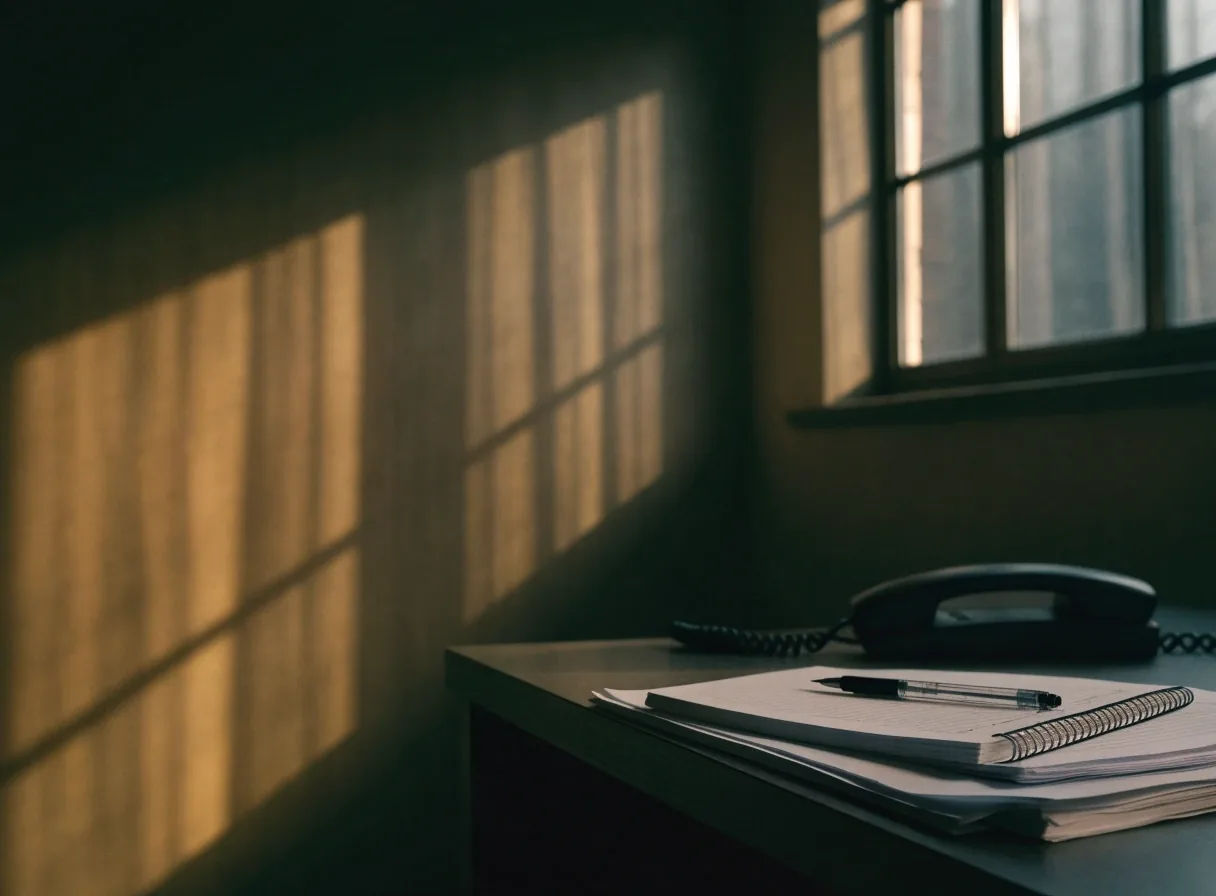
Client-side desk detail with a face-down phone, a notebook and an uncapped pen

Stakeholders

The map that shows who has been asked

Seven circles in a rough ring, a ring of surrounding influence behind them. One circle drawn twice, because it moved between rounds.

Revisions before the map settled

Two rounds

Hand-drawn stakeholder map of seven circles with one drawn twice

The pattern underneath

What the five shapes share

Every one of them had a written position or sequence that could be argued with before it was produced at scale. Every one of them had someone internal named as owner of the result. And in four of the five, the first proposed answer was revised before it was implemented.

That last number is the honest version. We do not claim a hit rate, because the outcome depends on decisions the client makes after we leave. What we can describe is the process that produced a revised answer in four of five cases: an internal reviewer who was not the author, and a scheduled point at which the plan was reopened.

Both of those are cheap to set up and both are hard to fake. If a consultancy cannot describe who reviews its own first draft, or when the plan gets reopened, the correction has probably never happened on that engagement.

Corrections on this page

Seven marks, and what each one removed

We mention this because a page of case examples with no corrections visible is either very young or very selective. Neither is a good sign in a consultancy.

  • Three marks A claim about a client outcome, removed because the client had not approved the wording.
  • Two marks A figure we could not verify, so it does not appear anywhere on this page.
  • One mark A case shape recognisable enough to identify the client, so it was generalised.
  • One mark The sentence you are reading now, which is the second version of it.

Reading any case study

How to read a case study from anyone

Four questions get most of the value out of a case study, whether it comes from us or from a competitor.

What was the constraint that made it hard?

A case that reports only the favourable outcome is telling you the work was easy. Real engagements are constrained by budget, by internal politics, by a decision already made.

What was the first answer, and why was it wrong?

If a case study cannot answer this, the work was probably never corrected. The first draft is always the fastest thing anyone can write down; the useful part is what was changed after someone read it.

Who inside the company owned the result?

If the answer is the consultant, the outcome probably depended on the consultancy staying. Ask who was named, and whether that person is still at the company.

What would have happened if it had stopped halfway?

The answer separates the engagements that produced something durable from the ones that produced a presentation. If nothing would have survived, the deliverable was the deck.

Bring us your situation

The first call is where the honest version of the situation comes out

We will not guess which of your problems we can solve before we have heard it. The first call is roughly an hour, at our office in Munich or on a call, and it ends with either a shape we recognise or a referral to someone better placed.

UrbanPeak Marketing GmbH develops and implements marketing and communications strategies — positioning, stakeholder communication, Medienarbeit, and the internal sequencing that keeps all three aligned.

Landsberger Straße 302, 80687 München · +49 69 4800 6781 · [email protected]